Source personalized pu leather wrap bracelet for gifts, decor, and parties
Compare 30 listings of personalized pu leather wrap bracelet options featuring leather and stainless steel materials. Buyers can evaluate customization support, plating types, and sizes ranging from 18cm to 22.5cm for formal or informal occasions.
Key considerations
Products List


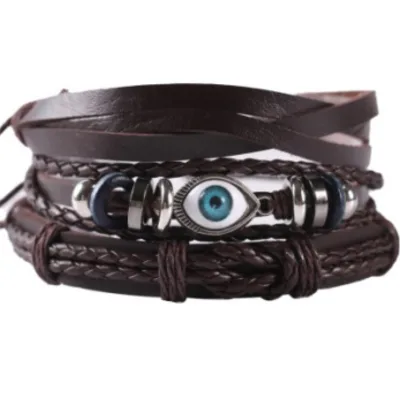


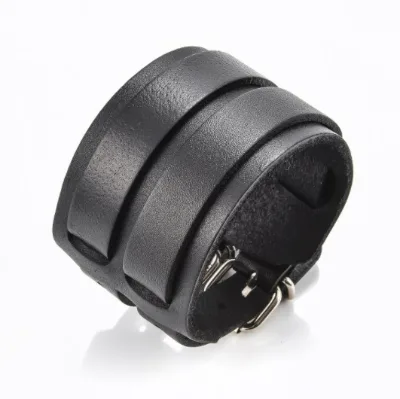


Comprehensive Sourcing Guide
Strategic Sourcing Guide for Personalized PU Leather Wrap Bracelets
The global market for personalized accessories has seen a significant shift toward customizable, multi-functional jewelry that blends traditional craftsmanship with modern aesthetic demands. For procurement professionals and B2B buyers investigating the core keyword "personalized PU leather wrap bracelet," the supply landscape presents a complex array of options ranging from simple fashion items to high-end decorative pieces. This guide synthesizes observed market data and technical attributes to provide a disciplined framework for sourcing these items. The focus remains on understanding the tangible specifications, verifying compliance, and evaluating cost structures without relying on unverified marketing claims.
Technical Specifications and Material Composition
When sourcing personalized PU leather wrap bracelets, the first critical step is defining the technical parameters that distinguish a viable product from a substandard one. The observed market data indicates a diverse range of material compositions. While the core keyword specifies "PU leather," the actual supply base often includes products labeled as "Leather" or "Stainless Steel" with leather accents. Buyers must verify the specific material type listed in the product attributes. Some listings explicitly state "Material: Leather," while others specify "Material Type: Stainless Steel," suggesting a hybrid construction where the wrap element may be PU or genuine leather, but the structural components are metal.
Size is another pivotal specification. The data reveals a wide variance in dimensions, with specific models citing lengths such as 21cm, 21.5cm, 22.5cm, and a broader range extending from 18cm to 22cm. This variation is crucial for inventory planning, as a "one-size-fits-all" approach may not suffice for a unisex market. The "Design" attribute frequently mentions "Multi layers wrap cuff leather bracelet," indicating a construction that relies on multiple strands or layers to achieve the wrap effect. Buyers should confirm the exact length and layer count to ensure the product fits the intended demographic, whether it is marketed for "Male," "Unisex," or specific gender segments.
Furthermore, the "Craft" and "Polish" attributes provide insight into the finishing quality. High-end listings often feature "High Mirror Polished" or "Hand Polished" finishes on metal components, utilizing "PVD Plating" or "IP Plated" technologies. These plating methods are essential for durability and color retention, particularly when the product is intended for "Formal Occasions" or as a "Gift." The "Style" attribute varies from "Simple" to "Antique" and "Exoticism," requiring buyers to align the technical finish with the visual aesthetic of their target market.
Compliance, Certification, and Safety Standards
In the B2B sector, compliance is not merely a formality but a prerequisite for market access. The supplied facts highlight specific certifications that buyers should prioritize during the supplier evaluation phase. A recurring observation in the product data is the mention of "SGS/Reach" certificates. These are critical indicators of chemical safety and environmental compliance, particularly for products that come into direct contact with skin. Reach compliance ensures that the materials used, including the PU leather and any metal alloys, do not contain prohibited substances like certain phthalates or heavy metals.
Additionally, the "Certificate Type" is noted as "Third Party Appraisal" in several listings. This distinction is vital for procurement teams that require independent verification of product claims. Relying solely on self-declared certifications can pose a risk; therefore, buyers should request valid, up-to-date third-party test reports. The "prod_standard" is often listed as "as pic," which is a vague descriptor. A disciplined buyer must interpret this as a requirement to verify that the physical product matches the provided images and that the manufacturing process adheres to the standards implied by the visual representation.
For products marketed with health-related claims, such as those listed with "Usage: Decoration, Health, Gift," the compliance burden increases. While the data mentions "Health" as a usage category, it does not provide specific medical certifications. Buyers must exercise caution and verify if any health claims are supported by recognized medical standards or if they are purely marketing terms. The "Certificate" field serves as a baseline, but specific regional requirements (such as FDA for the US or CE for Europe) should be verified against the supplier's documentation before placing an order.
Cost Drivers and Pricing Structures
Understanding the cost drivers for personalized PU leather wrap bracelets requires an analysis of the observed price ranges and minimum order quantities (MOQs). The market data indicates a price range of $0.07 to $9.00 USD. This wide disparity suggests that the final cost is heavily influenced by the complexity of the design, the quality of materials, and the level of customization. A simple leather band with basic plating will likely sit at the lower end of this spectrum, while a multi-layered, hand-polished, PVD-plated bracelet with complex customization will command a premium price.
The MOQ is another significant cost factor. The observed range spans from 6 pieces to 1000 pieces. This flexibility allows buyers to test the market with low-risk orders or to secure bulk pricing for established product lines. However, the "Customization" attribute is a major cost driver. Listings that support "Customized Logo" or specific design modifications often have higher MOQs, such as the observed 100PCS threshold for certain leather bracelet models. Buyers must balance the desire for low MOQs with the need for customization. If a buyer requires a custom logo on a high-quality stainless steel and leather hybrid, they should anticipate a higher unit cost and a potentially higher MOQ compared to a standard, off-the-shelf item.
The "Packaging Details" also influence the final landed cost. Options range from simple "OPP Bag" to "Individual OPP Bag, Packing Box." Premium packaging adds to the unit cost but is often necessary for products intended as "Gifts" or for "Formal Occasions." The "Selling Units" are sometimes listed as "Leather Bracelet" or "Pair," which affects how the cost is calculated per unit. Buyers must clarify whether the price is per single item or per pair, especially for unisex products that might be sold in sets.
Typical Applications and Market Segmentation
The versatility of personalized PU leather wrap bracelets allows them to serve multiple market segments. The "Occasion" attribute highlights a split between "Formal Occasions" and "Informal Occasions," indicating that these products can be positioned for both corporate gifting and casual fashion retail. For formal applications, the "Style" should lean towards "Simple" or "Antique" with high-quality finishes like "High Mirror Polished." These items are often marketed as "Decoration" or "Gift" items, where the aesthetic appeal and perceived value are paramount.
In the informal sector, the "Party Type" is noted as "Holiday Party," and the "Style" can be "Exoticism" or "Multicolour." These products often feature diverse designs such as "Guitar," "Bat," "Yin-yang," "Life-Tree," "Eye," and "Shield." This variety suggests a strong appeal to niche markets and youth demographics who value unique, statement-making accessories. The "Suitable for" attribute, ranging from "Male" to "Unisex," further expands the potential customer base. Buyers should align their product selection with the specific demographic they intend to target, ensuring that the design, color, and size match the preferences of that group.
The "Usage" attribute, which includes "Decoration," "Health," and "Gift," provides insight into the product's positioning. While "Decoration" and "Gift" are straightforward, the inclusion of "Health" requires careful handling. If a product is marketed for health benefits, the buyer must ensure that the supplier can substantiate these claims with appropriate documentation, as unverified health claims can lead to regulatory issues in many jurisdictions.
Supplier Evaluation and Verification Protocols
Evaluating suppliers for personalized PU leather wrap bracelets requires a rigorous approach to verifying the claims made in product listings. The "Location" data points to "China" and specifically "Guangdong, China," a major manufacturing hub. While this provides a geographical context, it does not guarantee quality. Buyers should verify the "Brand Name" and ensure that the supplier has a track record of consistent quality. The "Brand Name: Right Grand Jewelry" is one example, but buyers should not limit their search to a single brand.
The "Customization" and "Support" attributes indicate that many suppliers offer tailored services. However, the ability to customize does not automatically imply the ability to maintain quality control. Buyers should request samples to verify the "Craft" and "Polish" quality, specifically checking for issues like uneven plating, loose threads, or poor stitching. The "Dropshipping: Yes" attribute suggests that some suppliers are equipped to handle direct-to-consumer logistics, which is a valuable capability for e-commerce buyers. However, this should not replace the need for a thorough pre-shipment inspection.
When evaluating suppliers, buyers should also check the "prod_packing" standards. Whether the product is packed in an "OPP Bag" or a "Packing Box," the packaging must protect the item during transit. The "Standard" listed as "opp bag" or "as pic" is insufficient on its own; buyers must define their own packaging standards to ensure the product arrives in perfect condition.
Quality Control and Long-Term Procurement Strategy
Implementing a robust quality control (QC) strategy is essential for maintaining brand reputation in the personalized jewelry sector. Given the "Feature: High Quality" claims found in the market data, buyers must establish clear acceptance criteria. This includes verifying the "Weight" of the product, which is listed as 25g in some cases, to ensure consistency across batches. Variations in weight can indicate inconsistencies in material density or plating thickness, which can affect the perceived value of the product.
Long-term procurement considerations involve building a relationship with suppliers who can scale production while maintaining quality. The "MOQ" range of 6 to 1000 pieces offers flexibility, but buyers should aim to negotiate volume-based pricing tiers as their order quantities grow. The "Customized Logo" capability is a key differentiator, and buyers should ensure that the supplier has the technical capacity to apply logos consistently without damaging the underlying material.
Finally, buyers should monitor the "Lead Time" and "Production Capacity" of their suppliers, even though specific numbers are not provided in the data. The "Place of Origin: Guangdong, China" suggests a competitive market with many potential suppliers, but lead times can vary based on the complexity of the customization. Establishing clear communication channels and setting realistic expectations for delivery times will help mitigate supply chain disruptions. By focusing on verified specifications, compliance, and quality control, buyers can successfully navigate the market for personalized PU leather wrap bracelets and build a sustainable, profitable product line.
FAQs
What materials are used for personalized pu leather wrap bracelets?
Products often use leather or stainless steel with leather accents. Some listings specify PU leather while others combine metal with wrap elements. Buyers must verify the exact material type listed in product attributes to ensure compliance with their requirements.
Which certifications should I look for in these bracelets?
Look for SGS and Reach certificates to ensure chemical safety and environmental compliance. Third-party appraisals are also common for independent verification. These certifications confirm that materials do not contain prohibited substances like heavy metals or phthalates.
How can I find suppliers with low minimum order quantities?
MOQs range from 6 pieces to 1000 pieces depending on the product model. Simple items often have lower thresholds, while custom logo options may require 100 pieces. Buyers should filter suppliers by their specific quantity needs to find suitable partners.
What customization options are available for these bracelets?
Customization is widely available including customized logos and specific design modifications. Some models support multi-layer wrap designs with various symbols like guitars or yin-yang. Buyers should confirm if custom logos require higher MOQs or additional costs.
Can I source these bracelets from Guangdong, China?
Yes, many products originate from Guangdong, China, which is a major manufacturing hub. Listings explicitly state this location for various models. Buyers should verify specific factory details and lead times associated with this region for accurate planning.
What are the typical size specifications for these bracelets?
Sizes vary significantly, with specific models listing lengths from 18cm to 22.5cm. Common sizes include 21cm, 21.5cm, and 22cm. Buyers must check the exact length for each model to ensure a proper fit for male or unisex markets.